Every dog should have one cue that she can do anywhere at any time. “Sit” is a great contender for that job! It may seem silly at first to have to teach “sit” to your dog, but it’s an essential part of training. It gives your dog a way to say “please,” and can become their default greeting, which stops them from jumping on people.
Step 1: Show How to Sit
The first step to teaching your dog sit is to show them how to do it! Lure your dog into sitting by putting a treat up to their nose and moving the treat slowly over their head toward the tail. Keep the treat lure close to your dog’s nose. If you move your hand up too quickly or too far away, they may give up and lose interest in sitting.
Step 2: Pay It
As soon as your dog’s hindquarters hit the ground, it’s time to praise and treat! This is very important to do, as your dog will want to sit when they know they will be rewarded. Repeat as many times as you can, so long as you and your dog are still enjoying yourselves. Praise and treat every sit.

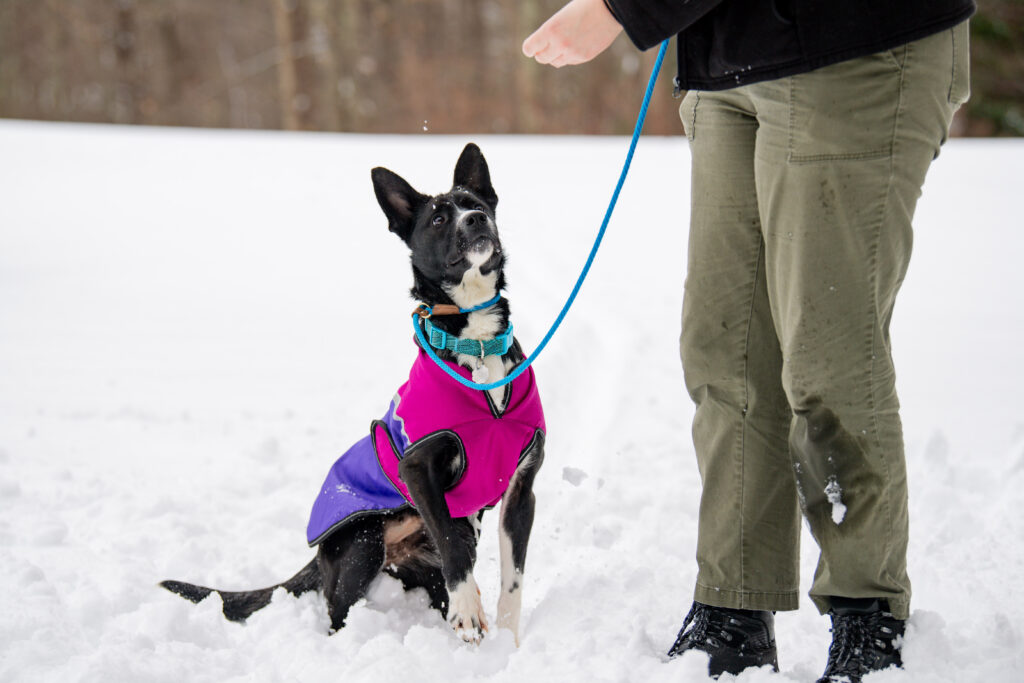
Step 3: Repeat the Sit
Now that you’ve gotten a sit with praise and treats, you should repeat! This is essential to your dog’s learning of the cue and understanding what to do when you ask them to “sit” (which we will get to shortly!). As soon as your dog starts to sit reliably, it’s time to fade the food lure.
Step 4: Fading the Treat
Start with taking the treat out of your hand and repeating steps 1-3 without the food lure. Continue doing this until your dog sits reliably using a hand signal without you holding the food in your hand. Once they can do this comfortably, it’s time to add a verbal cue!
Step 5: Say It
As long as your dog is reliably sitting with only the hand signal and without a food lure, you can add the verbal cue of “sit” in a cheerful tone! After you say it, pause a second(one-one thousand), and then lure your dog into a sit with the hand signal. As soon as they do so, praise and treat! When you and your dog have successfully completed this several times, move on to fade the hand signal.
Training Tips
- Be sure to wait that second in between saying the cue and luring your dog into a sit. If you do both at the same time (called overshadowing), your dog might not ever learn the word by itself, and you will be stuck luring forever.
- Best times to practice: Before throwing a ball, frisbee, rope-toy, etc. Before giving your dog a toy. Try before putting the food bowl down or handing over a treat. Ask for a “sit” before putting on a leash to go for a walk, as well as taking off a leash at the park or beach.
- If you say the cue and then can’t lure the behavior, do not repeat the cue a second time. Just go back to step 4 and train silently for a bit longer, you may have moved to step 5 too fast.